
Art Stripped Bare by Post-Autonomists, Even

January's Art and Immaterial Labour conference at the Tate brought together some famous names from post-Autonomia to discuss conjunctions between the dematerialisation of art and immaterialisation of labour. John Cunningham reports
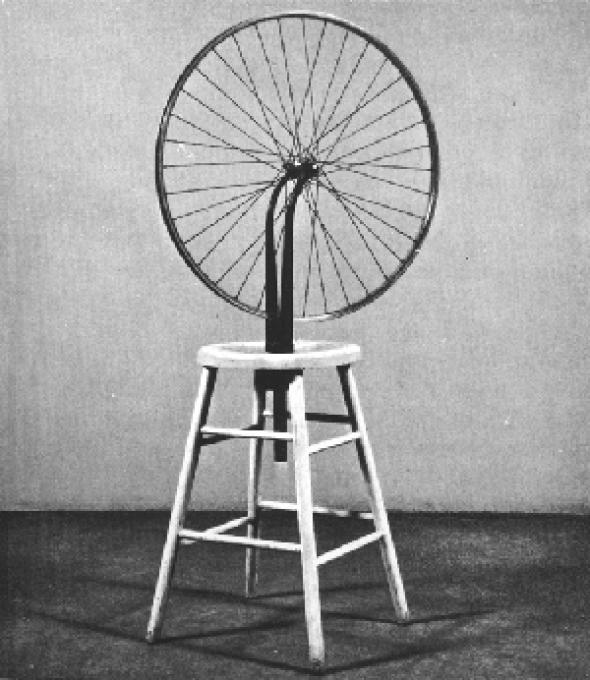
Upon hearing that some of the stars of the post-autonomist scene – Maurizio Lazzarato, Judith Revel, Franco Beradi aka Bifo and Antonio Negri – were to give presentations at a conference examining the conjunction of ‘immaterial labour' and art, my initial reaction was fairly sceptical. The concept of immaterial labour has always showed signs of strain at the sheer weight of revolutionary expectation placed upon it – a carrier of a subversive charge so immanent to capital that it is almost already here. This conclusion has been subjected to an incisive critique by more sober analysts within autonomist Marxism such as George Caffentzis, Steve Wright and Sergio Bologna, amongst others. Given the pre-eminence of symbolic production inherent to immaterial labour, that Lazzarato and Negri, both intimately connected with the theorisation of immaterial labour, should now be addressing the role of contemporary art did seem oddly appropriate. However, it was also a source of potential disquiet. From the mass worker of operaismo (workerism) to the socialised worker of Autonomia to cognitive labour – would the cycle of struggles end in the self-valorisation of the knowledge worker and ultimately the artist? Such a schema is an easy caricature of this variegated discourse around the possibilities of resistance in post-fordism. Indeed, immaterial labour has lent itself to an uncritical optimism regarding its potentiality to give rise to the subversive subjectivities of the multitude. After an introduction by Peter Osborne of Radical Philosophy (co-organisers of the conference) and Eric Alliez of Multitudes, Lazzarato presented his paper, ‘Art, Work and Politics in Disciplinary Societies and Societies of Security.’ It immediately became apparent that one major problem of the conference was to be the difficulties of translation. This was unfortunately the case despite the uniformly excellent work of the translators, mainly Arianna Bove of Generation Online. Whereas Revel and Negri with some hesitancy but good grace read their papers in English, Lazzarato relied upon a simultaneous translation that caused him to cut sections and occasionally become confusing. Bifo seemed more comfortable speaking English and this showed in his more charismatic delivery. The audience was substantially different from a political event, philosophers seeming to twitch and mutter in a more muted way. This subdued atmosphere may also have been due to the particular psychogeographic effects of the Tate Britain lecture hall upon the docile subjectivities within it, inducing a soporific daze in even the most hardened post-autonomist acolyte. In a reading of Marcel Duchamp’s readymades and Franz Kafka’s short story ‘Josephine the Singer’, Lazzarato attempted to trace the possibility of a third term between the dichotomies of work and play established by capital. He described this as a suspensive space emerging through a gesture of refusal within the practice of art that consists of the appropriation of everyday objects, as in the readymade, through a minimal activity that removes virtuosity from the production of art. This problematised several themes theorised by Michel Foucault that Lazzarato characterised as the ‘society of security’, wherein the production of a certain amount of ‘freedom’ to produce value necessitates the management of difference. The injunction to create is subverted by such an artistic gesture; the distinction between the everyday and art, work and play, become subject to a double suspension and within this space there is the production of a more subversive subjectivity subtracted from the demands of utility and value.
Autonomist and post-autonomist thought has always had a place for Bartleby-style negation and it is unsurprising that Lazzarato’s paper should reintroduce a figure of the refusal of work in the guise of artistic practice. Lazzarato’s reading of ‘Josephine the Singer’ introduced the figure of the public and the worker into this analysis since Josephine, while an artist, only sings in a way that is easily replicated by the other workers. Lazzarato argued that it is a similar suspension that diffuses artistic labour across the social.
There was a Bataillean ‘unemployed negativity’ – a surplus at the heart of the productive apparatus of capital – in Lazzarato’s interpretation of Duchamp that placed it dangerously close to positing the kind of ‘outside’ to capital that Judith Revel’s paper sought to dispute. Revel also based much of her paper, ‘The Material of the Immaterial: Against the Return of Idealisms and New Vitalisms’, on Foucault. From an analysis of Foucault’s work on art, Revel’s main concern was the production of resistance through the irreducibly materialist networks of biopolitical production. The most interesting part of her paper was a sustained polemic against Giorgio Agamben’s concept of ‘bare life’ as the basis of biopolitics and political sovereignty. It was Revel’s contention that Agamben’s ahistorical formulation of bare life, subtractive trace or remainder of biological life, reformulates Foucault’s concept of biopower only to remove all sense of agency from the subject. 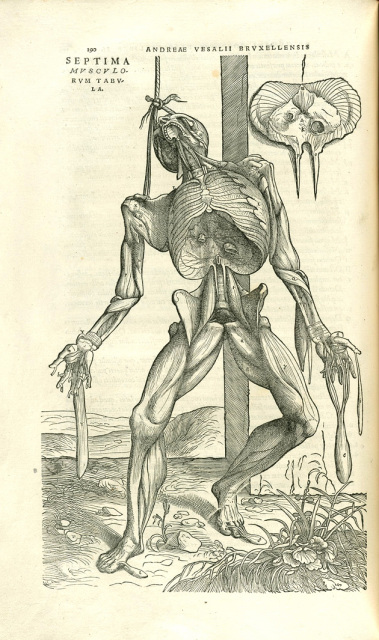 Image: Engraving from De Humanis Corporis Fabrica, Andrea Vesalio, 1568
Revel’s reading of Foucault’s ‘technologies of the self’ emphasised the role of art as a process of the production of the subject albeit intertwined with networks of governmentality. She emphasised the complex interaction between these poles of subjectification and the infinity of ways that power is employed within this process of governmentality to create value within ‘immaterial labour’. Against Agamben, who she maintained posited an impersonal universality of bare life as what remains and resists, Revel insisted upon an account of the production of resistance that is historical and materialist. One that contains a potentiality that is embedded in contemporary forms of production, an immateriality that is not opposed to the material. Nonetheless, a fairly classic reformulation of biopolitics within this strand of post- Autonomia. Bare life, for Revel, simply did not exist. She viewed it as an attempt to produce a theory of the margins that contradicted the insight of Foucault that it was necessary to invent forms of struggle that act upon the relations of power and produce new forms of subjectivity. Revel’s emphasis upon an ‘aesthetics of the self’ as a form of political agency, is itself problematic. It particularly lends itself to identity politics, the production of a marginal oppositional subject, and tends to downplay capitalism, the present system of production, in favour of more abstract networks of power.
While Revel’s critique of Agamben is a necessary corrective to the way that bare life has almost become a new critical orthodoxy in discussions of biopower, it might prove more difficult to dismiss bare life than the above summary suggests. Agamben has produced, in bare life, a concept that articulates a particular aspect of the operation of political sovereignty over ‘life’ in contemporary society. Whereas Revel emphasised the ‘marginality’ of bare life, Agamben is always at pains to underline that bare life, while originally situated on the margins of the political, now coincides with it in a ‘zone of indistinction’ and is diffused throughout society. It is not so much that we are all necessarily one step away from the camp or rendition centre, as much as that we are always already bare life in our everyday lives. Perhaps with reference to works, such as The Many Headed Hydra or The London Hanged by Peter Linebaugh, bare life could be historicised as one of the originary forms of primitive accumulation. Peter Osborne’s droll assertion that ‘Agamben is over’, to which Revel punched the air, seemed a bit premature.
As opposed to the sobriety of much Marxist theory, autonomist and orthodox, there is a certain philosophical drunkenness in much of the discourse that propagates ‘immaterial labour’ as the repository of antagonism towards capital; an eclectic theoretical ensemble composed of Marx, Foucault, Deleuze, Guattari and Spinoza. This eclecticism was on full display at the conference. While having the advantage of extending a broadly Marxist analysis in line with new conditions, it can also lead to a theoretical delirium that was most evident today in the figure of Bifo, a drunken master who administered a Zen slap to the general optimism of the 'multitude'. 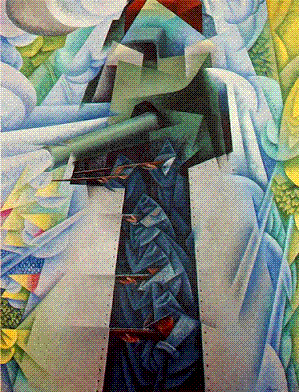 Image: Armoured Train, Gino Severini, 1915
Beginning with an analysis of the Manifesto of Futurism, Bifo emphasised the shift in technology from the externality of modernism to the internalisation of the machine in contemporary subjectivity. Whereas the focus of the previous two papers was on the production of subjectivity through the conjunction of art and resistance, Bifo, in his paper ‘Conjunction/Connection’, argued that there would be no next wave of subjectification or political agency due to the shift from a society based around ‘conjunction’, composed of machinic assemblages that produce gaps and lines of flight, to a society based around ‘connection’ and the sensory overload of ‘semio-capital’. In the society of ‘connection’, Bifo argued, the interpreter must learn to recognise a sequence, there is no room for ambiguity and the inability to recognise such a sequence leads to various social anxieties, expressed in psycho-pathologies such as panic, suicide, self-mutilation, etc. In fact Bifo predicted a ‘wave of suicides’ that he also related to the collapse of distinctions in time due to an increased ‘precarity’. This production of an overwhelming sprawl of time, paralleled in the infinite expansive capabilities of ‘cybertime’ and cyberspace, marked the end of a future based upon any kind of technological speed based upon relative use value.
 Image: Mechanical Head, Raoul Hausmann, 1919 Bifo’s despair was genially universal. He rejected any application of art as activism as already superseded by the deterritorialising flows of capital, more efficient at mobilising the potentialities of the ‘general intellect’. Any form of creation was an intimate form of exploitation within what he termed a ‘Prozac economy’. Much of this did sound like the Baudrillard/Kroker axis of cybertheory that was influential in the 1980’s and 1990’s. An important proviso is that Bifo was speaking from the heart of a strand in post-Autonomia noted for its relative optimism. His assertion that the precarious nature of labour and its subsequent expropriation of time leads to an inability to project oneself as a political subject grounded his dystopian vision in a critique of the rhetoric of ‘immaterial labour’, that has an almost evangelical zeal for the potentialities of the multitude. Bifo advocated the 'intellectual potency of depression'. This was surprisingly well received at the conference, perhaps because of the strangely invigorating qualities of a dose of pessimism and the sense that, however pessimistic, he had in no way given up. However, Bifo’s description of Lenin’s three nervous breakdowns produced images in my mind of the old Bolshevik weeping and writing What is to be Done, that I would rather forget.
There was a real sense in the panel of a shared political engagement and particular warmth between Bifo and Negri, who stated that Bifo’s questioning of Autonomist orthodoxy in the 1970’s, was correct. In comparison to his expressive, charismatic manner when presenting something in Italian Negri was restrained and heroically concentrated upon reading his paper in English. ‘Concerning Periodisation in Art: Some Approaches to Art and Immaterial Labour’, marks one of the rare instances where Negri has explicitly addressed Art, in contrast to Badiou, his major rival in questions of subjectivity and radical politics. He began with a broadly post-Autonomist spin on a classic trope in Marxism – the link between different modes of production and forms of art. Commencing with 1848 and the beginning of the cycle of emancipatory politics with the artisan, Negri emphasised how Courbet articulates something of the real of the struggle of the period 1848-1871, then how post 1914 the abstract forms of artistic production correspond to the increasing abstraction of labour and capital in the period of the mass worker. Post 1968 and into the 1970’s, with the gradual emergence of the socialised worker he emphasised the role of the dematerialisation of art as a de-structuring demystification of the object and apparatus of capital.
This is a very rough précis of the first part of Negri’s paper because by this point the long day of dense theory was beginning to take its toll and I was craving my own subtraction or exodus in search of food and alcohol. However, it did seem that in drawing such broad strokes Negri ran the risk of removing the singularity of particular moments of art that might be related to sequences of emancipatory politics. For instance, the rupture in art constituted by Berlin Dada (1917-20) has an undoubted relation to the politics of the Spartacist revolt that cannot be quite explained by such a periodisation.  Image: Fathers and Sons, John Heartfield, 1924 Negri suggested that artistic production is subsumed within the biopolitical production of life that traverses industry and creates the ‘commons’. However he proposed a contemporary role that would create an ethics capable of dealing with the ‘monstrous’ real of the biopolitical while postulating, with reference to Kant, a model of the sublime expressed in the creativity and resistance of the ‘commons'. What Negri was suggesting is similar to Jameson’s notion of ‘cognitive mapping’, perhaps with the added 'joy in production' that Negri’s reading of Deleuze and Spinoza contributes to his brand of post-Autonomia.
A frustrating aspect of the conference was the lack of specific contemporary examples, excepting Bifo, that might add flesh to the immaterial bones of a post-autonomist reading of Art. For instance the sound art collective Ultra-Red would seem to be a perfect example of a dematerialised practice that refuses the commodification of free downloads and immersion in art institutions. By being based on the net; their sound-based research into political struggle and social space, and emphasis upon the exchange between Art, politics and organisation, would seem to embody a model of interaction between art and ‘immaterial labour’. Another aspect that the relatively broad strokes of the conference singularly failed to address was the whole system of the art market, the production of value and the networks of institutions that create value from artistic practice. Odd, given that everyone speaking was a Marxist of sorts, and speaking at the Tate Britain. It was a relief that the focus of the conference was upon the possibility of resistance through the production of subjectivity and not the beginning of some sort of shift towards art as the embodiment of this. What emerged in the papers presented in the conference was an eclectic series of reflections that emphasised the role of art in the biopolitical production of subjectivity and resistance.
‘Dematerialisation’ or conceptualisation of art aside, one of the reference points of the conference suggested another possible ‘dematerialisation’ into the purely conceptual: that of this particular strand of post-Autonomia itself. Conferences such as this illustrate the danger of theory becoming its own self-regarding end point, reaching a plateau of conceptualisation that is divorced from the messy, concrete reality of the political. It is easy within the production of radical theory to mistake the statement for the thing itself. Politics, contra-Badiou, rather than being one of the conditions of philosophy, is expressed in increasingly opaque theory that mistakes itself for a politics when it is really a substitute. It is unfair to describe this strand of post-Autonomia, given that it’s still informed by the network of activists, social centres, etc., formed in the anti-capitalist movement as completely within the bounds of such a shift, but some of the rhetoric of ‘immaterial labour’ is well suited to the self-valorisation of the academy.
John Cunningham is a writer who lives in London Info:
Art and Immaterial Labour conference was held at the Tate Britain, London, 19 January 2008
Generation Onlinehttp://www.generation-online.org/
Radical Philosophyhttp://www.radicalphilosophy.com/
Multitudeshttp://multitudes.samizdat.net/
Ultra-Redhttp://www.ultrared.org/directory.html
Some audio from the recent 'Art and Immaterial Labour' event at the Tate Britain is available:
Here: http://www.ecopolis.org/art-and-immaterial-labor/
and
Franco 'Bifo' Berardi: http://download.yousendit.com/EC92CF1437048096
Maurizio Lazzarato: http://download.yousendit.com/A8E1E3981A1C7724
Antonio Negri: http://download.yousendit.com/2BB45E0011C01B90
Videos of some of the presentations and discussions: http://www.mazine.ws/node/574

Mute Books Orders
For Mute Books distribution contact Anagram Books
contact@anagrambooks.com
For online purchases visit anagrambooks.com

Proud to be Flesh: A Mute Magazine Anthology of Cultural Politics after the Net